The Rewilding Britain Garden RHS Chelsea Flower Show 2022
Published in The Sherborne Times, July 2022
In spring 2021, a chance conversation at Wincanton Town Festival led to a commission for a unique piece of artwork. Intrigued by Urquhart & Hunt’s stall at the Festival, and knowing a little bit about their work as environmentalists and landscape designers, I bought some organic bulbs from their stall and gave them a copy of one of my greeting cards.’ I thought nothing more of it other than the opportunity to say hello and share a love of all things wild and nature-based.
A few months later, I received a call to say that Urquhart & Hunt were working on a Rewilding Britain garden design for the 2022 Chelsea Flower Show and would I be interested in helping with some of the artwork? Commissions can be tricky; there are always doubts and questions when making any piece of art but a commission can sometimes also raise mis-matched expectations. Although this was something different, the fact that the garden would highlight the reintroduction of Beavers to the British landscape, after an absence of 500 + years, piqued my interest and I knew early on that this would be something that I would love to work on.
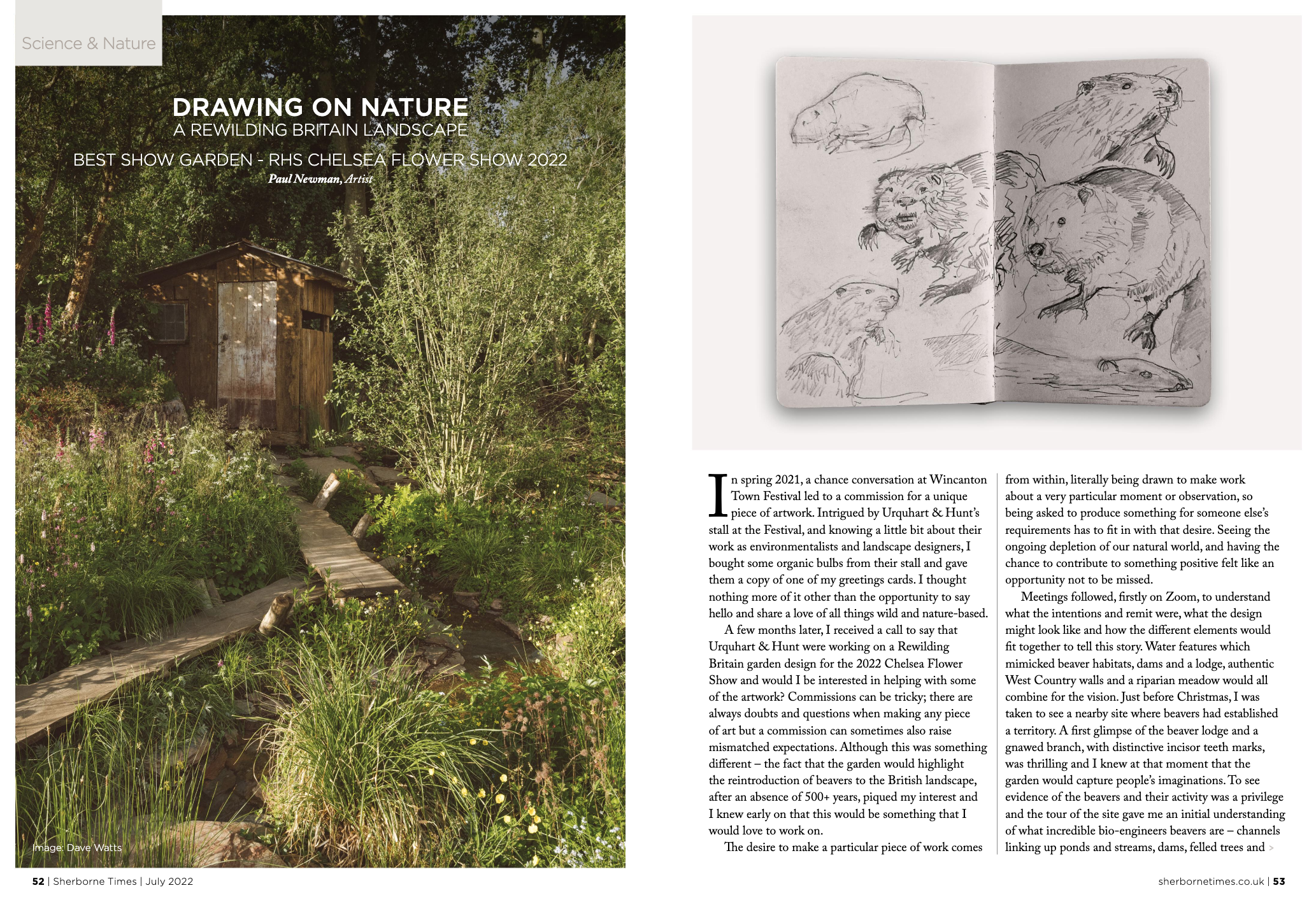
The desire to make a particular piece of work comes from within, literally being drawn to make work about a very particular moment or observation so being asked to produce something for someone else’s requirements has to fit in with that desire. Seeing the ongoing depletion of our natural world, and having the chance to contribute to something positive felt like an opportunity not to be missed.
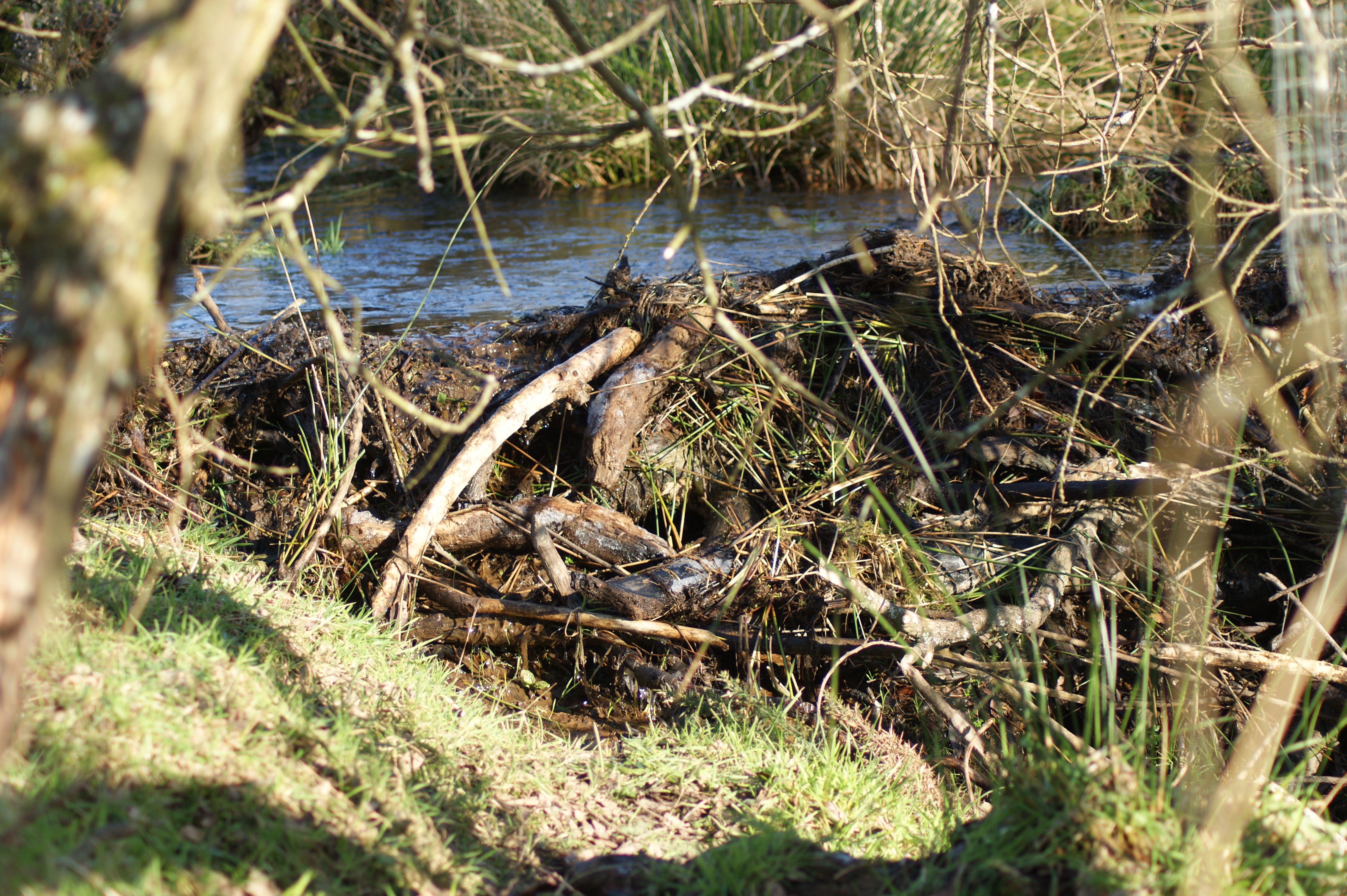
Meetings followed, firstly on Zoom to understand what the intentions and remit were, what the design might look like and how the different elements would fit together to tell this story. Water features which mimicked Beaver habitats, dams and a lodge, authentic West Country walls and a riparian meadow would all combine for the vision. Just before Christmas, I was taken to see a nearby site where Beavers had established a territory. A first glimpse of the Beaver lodge and a gnawed branch, with distinctive incisor teeth marks, was thrilling and I knew at that moment that the garden would capture people’s imaginations. To see evidence of the Beavers and their activity was a privilege and the tour of the site gave me an initial understanding of what incredible bio-engineers Beavers are. Channels linking up ponds and streams, dams, felled trees and the lodge itself all creating a unique ecosystem which then enables other species to thrive, building a food chain.
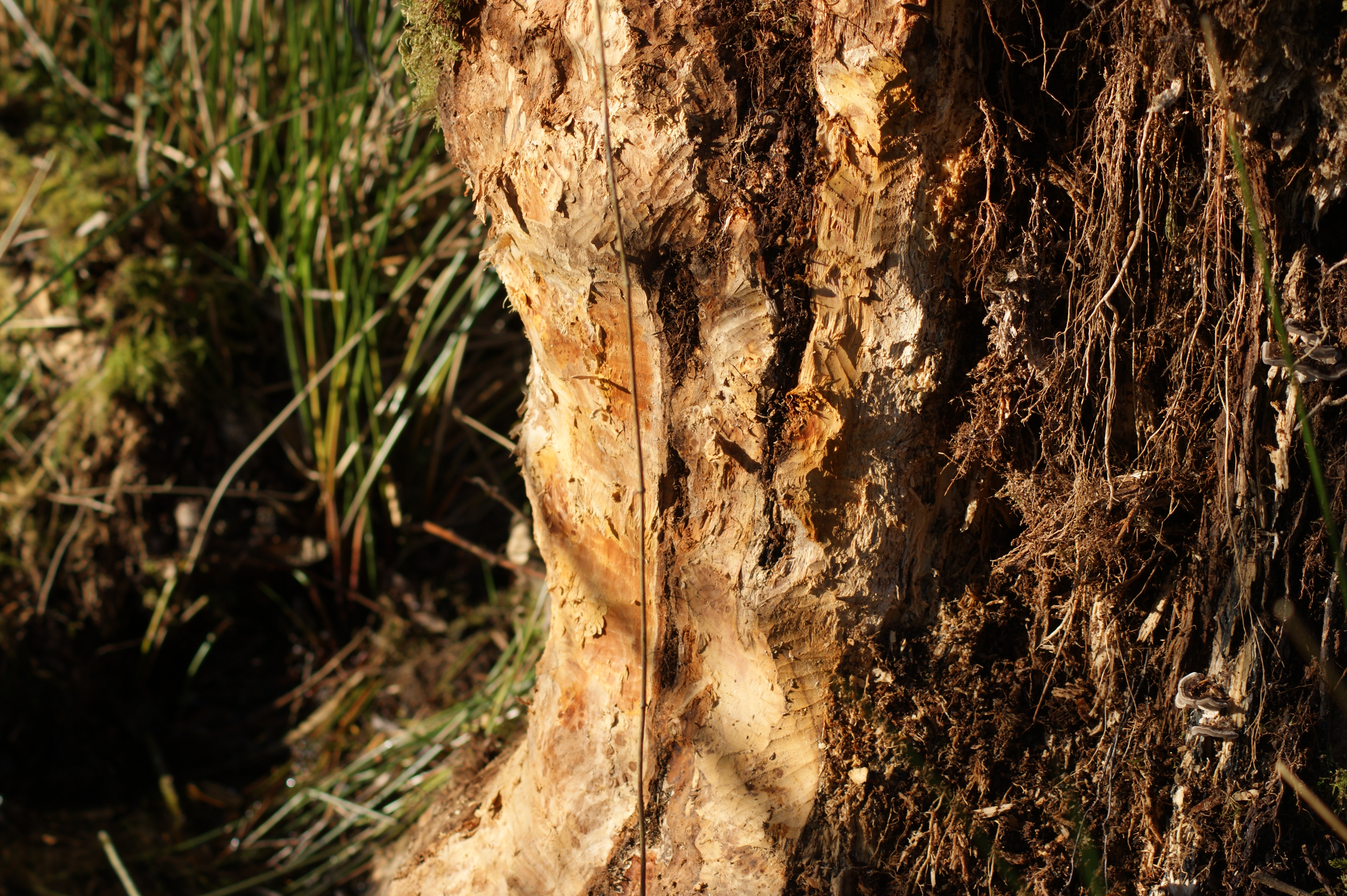
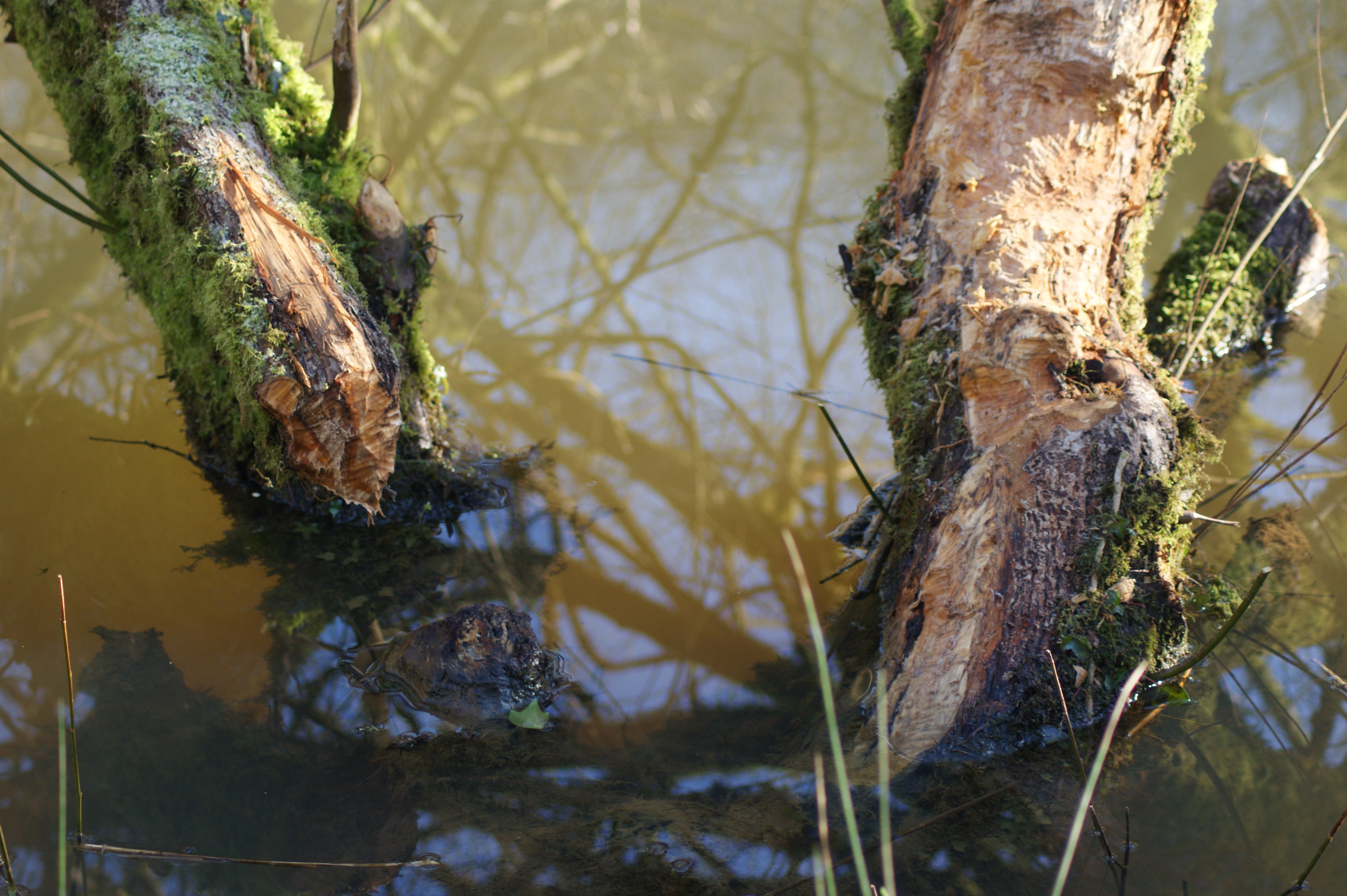
I have to admit to being initially alarmed at seeing some sizeable Alders felled, with the classic double inverted gnawing at their bases, but reassured that this only enhanced the landscape, encouraging new growth, natural coppicing and regeneration. I also thought that if we hadn’t denuded nature so much ourselves, the sense of loss would not have felt so great; the work of the Beavers was just part of the natural order of things. Further research revealed what special structures the lodges are too, the heap of sticks and branches carefully constructed and housing chambers, with a temperature-controlled, secure interior.
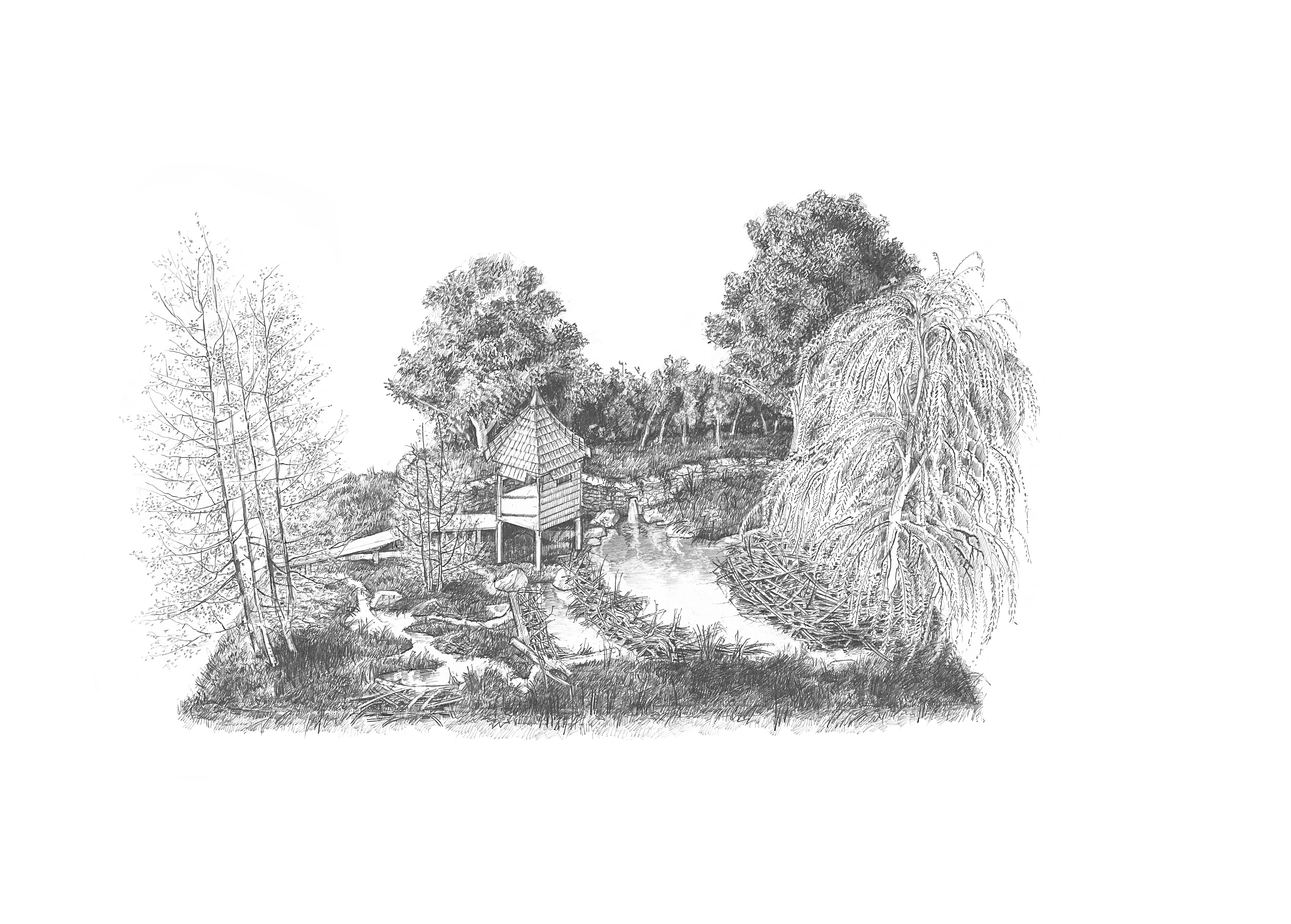
Responding to digital artwork which laid out the plans, I produced the hand drawn artwork over Christmas ready for the main rounds of press releases in the New Year.
Further visits were arranged for early February and I met with the team who would be working on the garden, at a couple of locations in Devon. We were accompanied by Professor Richard Brazier. Richard is a leading expert on Beaver reintroduction and it was fascinating to hear first hand how Beavers can create areas of huge water retention, preventing flooding downstream as well as their work as a keystone species enabling the flourishing of a truly bio-diverse landscape. Richard was at pains to point out that this does not just happen in isolation and the need to scientifically monitor licensed sites and mitigate any negative impacts on surrounding land use and human populations was vital to the success of this work. Structures such as ‘Beaver deceivers’ can help alleviate flooding in unwelcome areas. This is where I hoped that the artwork would have a small part to play in this process, helping interpret and explain to people about the positive role of Beavers on ecosystems as well as deflate a few myths.
The two sites we visited that day varied. The impression of the first site was completely unexpected and surprising. It was described as a ‘periglacial wood pasture’- boggy, criss-crossed by channels, with various grasses, mosses and trees growing in various directions with a backdrop of pioneer birch, and then oak. It was a tricky landscape to traverse, with a sense of very much being in another creature’s territory and not being that welcome! As we made our way across the site, a section of ponds and dams were revealed. This was repeated at the second site, which was more linear, again a succession of ponds and dams, but dotted along a river valley. As the damming created ponds, the rising water level had encompassed the base of nearby trees. Broken light filtered through. The watercourse changed further downstream, the dams becoming bigger and more elaborate, until we reached a very large pond with a dam which was big enough and established enough to walk across. Occasionally the dams break and the Beavers re-engineer them (re-wiggling them) to create a stronger structure, with greater surface area making contact with the water. The dams have a drop of several metres on the down stream side. It was incredible to walk across this dam and experience the Beaver’s engineering skills in this way. It was clear that the whole team would take the experience of the visit to these unique habitats into consideration and that the initial design would need to be re-wilded further. I was excited to see how this might evolve and how wild they would go.
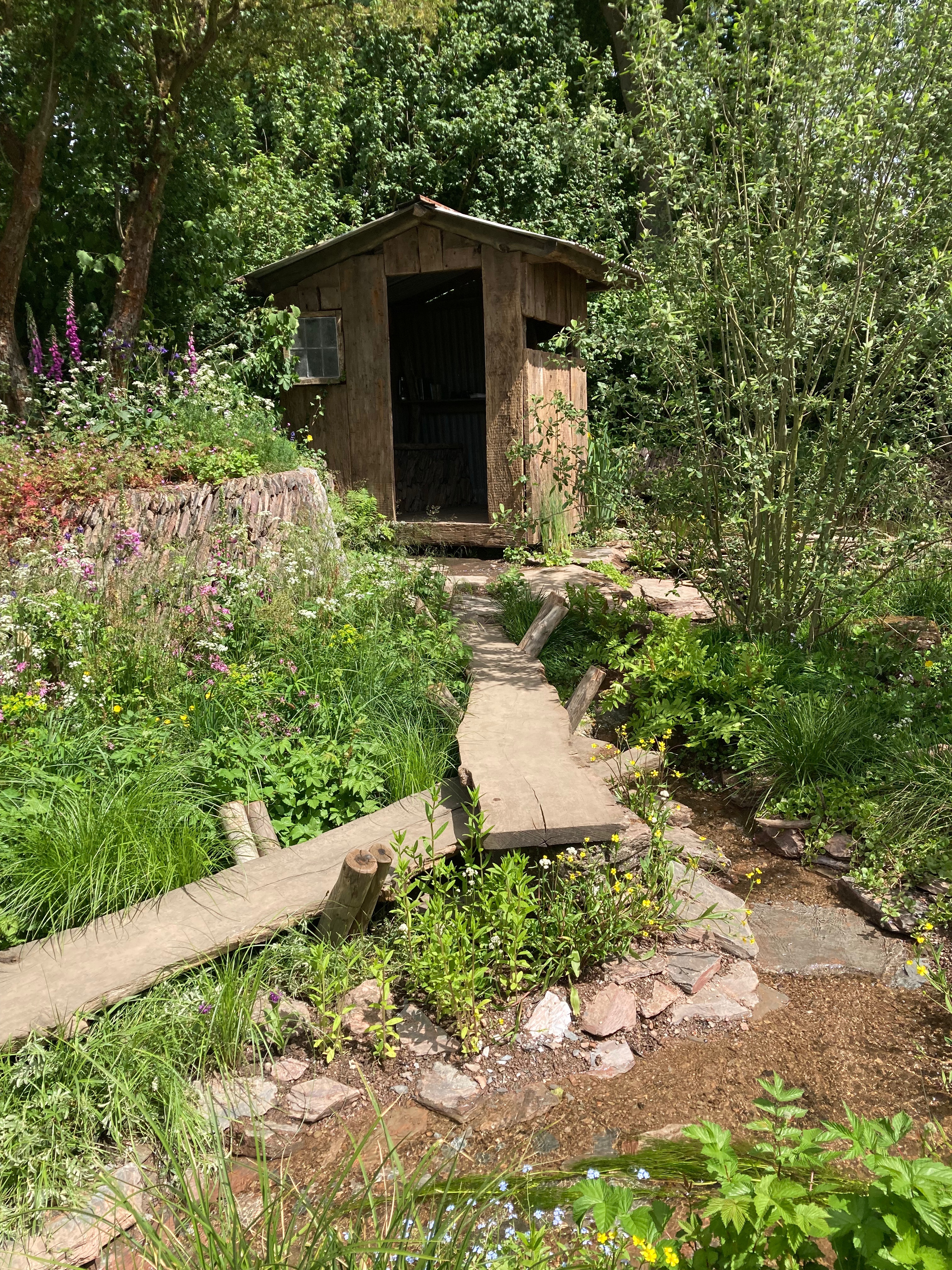
Seeing the garden at Chelsea, and understanding more about it’s evolution to something much wilder, was moving and to observe people’s responses was inspiring. The attention to detail was astonishing, and the planting exquisite, thanks to people such as Landscape Associates, Water Artisans, West Country Hedge Layer, Hillside Conservation and Leaf Creative. Supported by Project Giving Back and Rewilding Britain, the garden was a perfect slice of West Country in the middle of London and faithfully presented many of the main elements from the site visits. This even included a silted, murky pond and water filtering through the dam to create a clear stream with gravel beds, which in the wild would be ideal for spawning salmon and trout.
The garden won not only a Gold Medal but also RHS Best Show Garden. The richness and detailing of the design, bravery of the concept and importance of the idea warranted this achievement. Watching it on BBC, the decision generated much discussion. Was it a garden? From my experience of visiting Chelsea and seeing many of the other gardens, I was left with the question of not only what constituted a garden but also the role gardens play in our lives. Is it not only to do with our relationship with and understanding of nature, and where and how we engage with it, but also the questions and choices we must now face given unsustainable pressures on the natural world? Chelsea is very much a blank canvas onto which ingenuity is applied and ideas are sown to inspire us, whatever we might want to take from them.
Beavers bring so much to the landscape, almost single-handedly positively transforming not only the upper stretches of river courses but also having benefits further down stream as well. Their moving of sticks and debris help provide opportunities for diverse fungi habitats and improves soil and water quality, and changes in water movement. Beavers’ activity creates important and much needed space for amphibians, fish, small birds and mammals. They are remarkable creatures. But maybe just as important is the way this whole project, along with the Beavers themselves, might just be the story we all need to engage more people to appreciate our own place in the natural order, not outside of it, and capture people’s imaginations to take positive action to safeguard the future of the natural world, wherever we relate to it. Without visionary work like this, what we all stand to lose seems unimaginable.
 paul newman