8 drawings in response to Staverton Park and Thicks, Suffolk
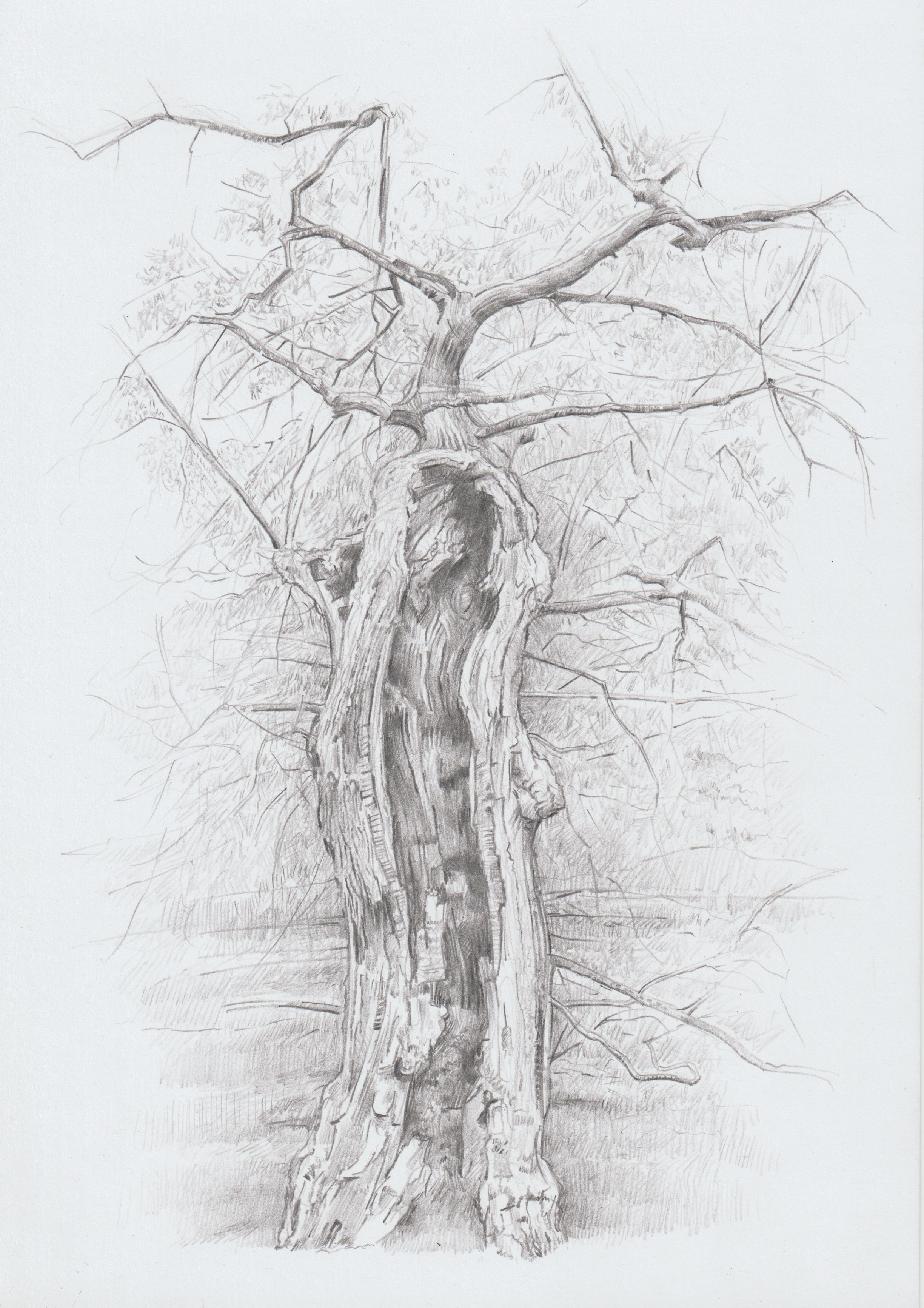
“Staverton is a place of mystery and wonder; it has a peculiar effect on first-time visitors who have no foreknowledge that the world contains such places” (Oliver Rackham, The History of the Countryside, 1986)
In the autumn of 2023 The Arborealists engaged in a two-year exhibition project on Staverton Park in partnership with Dr George Peterken OBE, celebrated expert and author on natural woodland and Gary Battell, ex-Suffolk County Council Tree Officer. Previous site-specific projects for the group have includes Lady Park Wood, Monmouthshire, and Trees and Woodland on Exmoor and Dartmoor.
Privately owned Staverton Park, of 240 acres and near Woodbridge in Suffolk, is one of the largest areas of ancient, pollarded oak trees in Europe. Of Saxon origin, the park is one of a handful of British medieval parks to have a continuous history from its establishment to the present. It is home to some rare and special fauna and flora and was one of the very first Sites of Special Scientific Interest to be established.
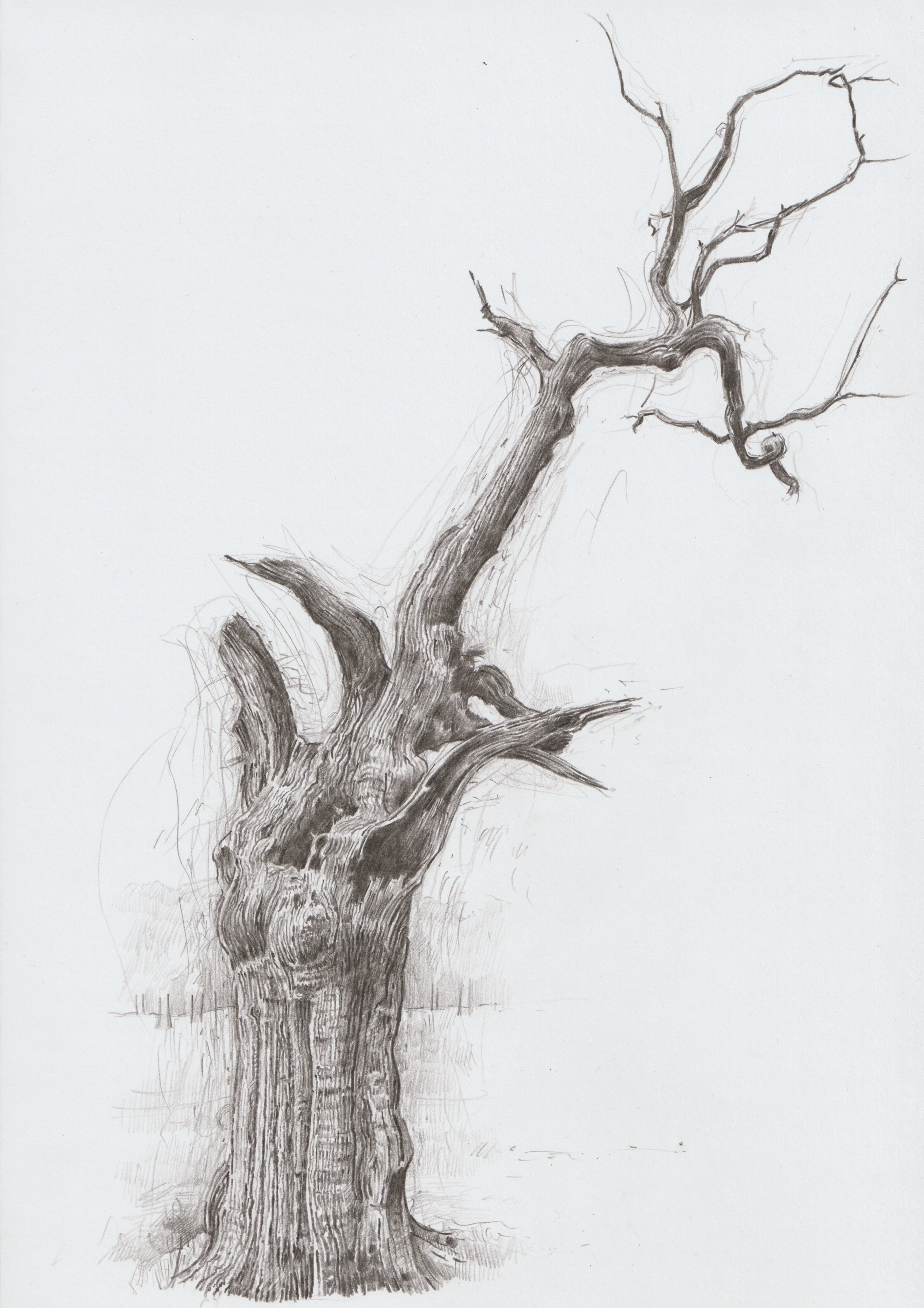
Staverton is the most remarkable woodland containing individual oak specimens with distinct characters and otherworldly forms. The Thicks are a delicious tangle, overwhelming and confusing as you enter, with gnarled, hollowed oaks grappling with vines, alongside giant holly and fine birches, striated with age. The neighbouring Park hosts an army of stoic oaks, seemingly spaced in a regimented way much as a Somerset Orchard, only wilder and much larger.
It’s hard to convey the sense of awe that creeps up on you as you first enter the site – to be confronted by the visual and energetic qualities of these unique organisms, dizzying and disorientating. Venturing from a defined path, the floor of the Thicks was, in places, carpeted with a patchwork of holly leaves in a variety of green; newer leaves still deep with shine and others muted by early decomposition. This instantly reminded me of childhood, and the hollies which seemed to feature a lot in the semi-ornamental planting of the Chines which led to the sea, near to where we lived in Poole.
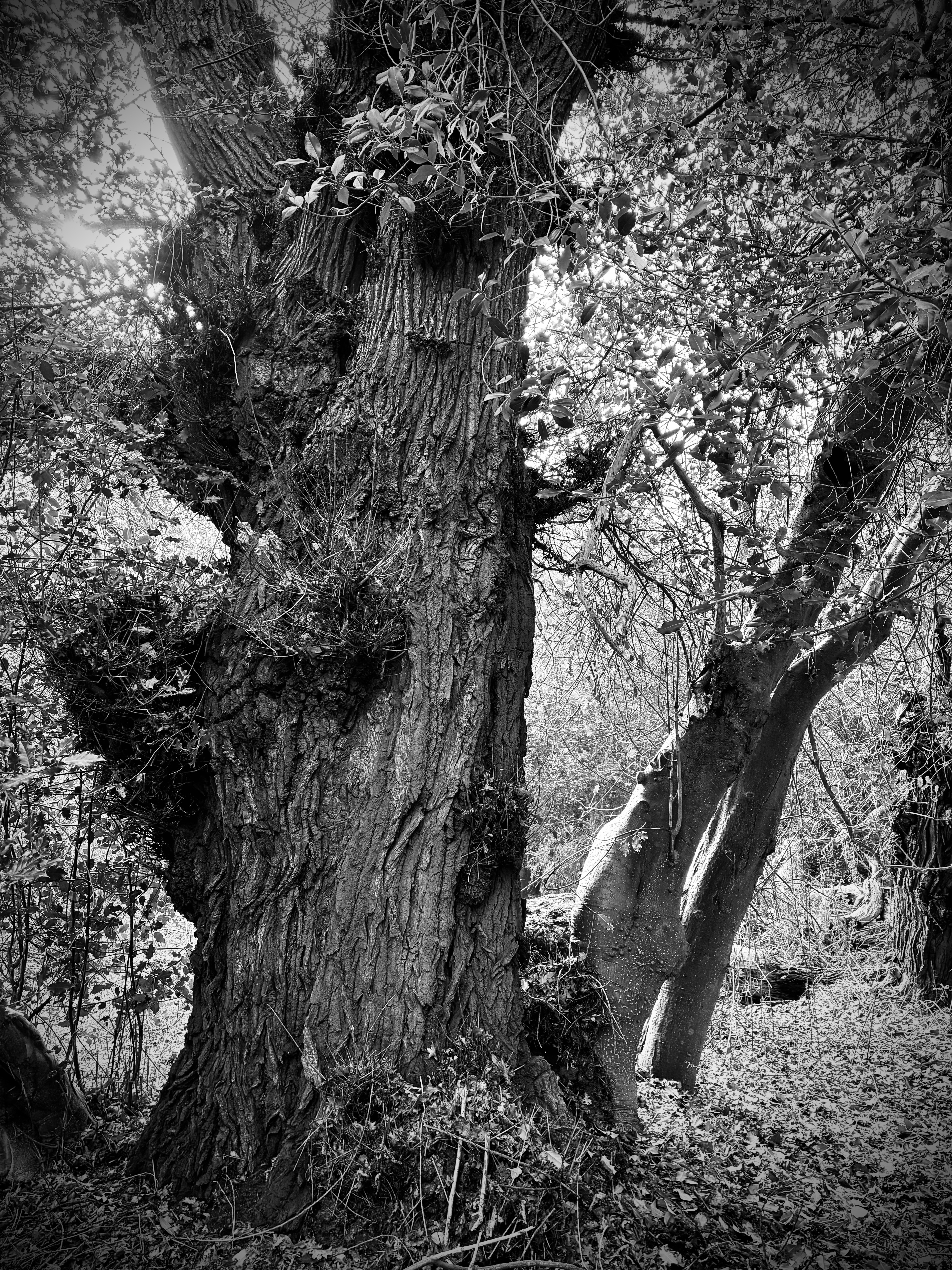
The Thicks felt forbidding, tangled territory full of secrecy, barbs and myth, yet still inviting your senses to run wild. The surrounding area is one of secrecy and from neighbouring Rendlesham Forest with its otherworldly tales, and the nearby curiosity of Orford Ness with its role in the Cold War, Staverton is in every sense real yet there is something intangible, removed and perhaps preternatural in the feeling of being there.
No visit to a wood or encounter with trees has ever felt as Staverton did. It is simultaneously familiar in the way that nature can be, comforting in its mystery but alien in the feeling of something forgotten or lost to our knowledge. You leave with a sense of something rediscovered and reawakened, alert, intrigued.
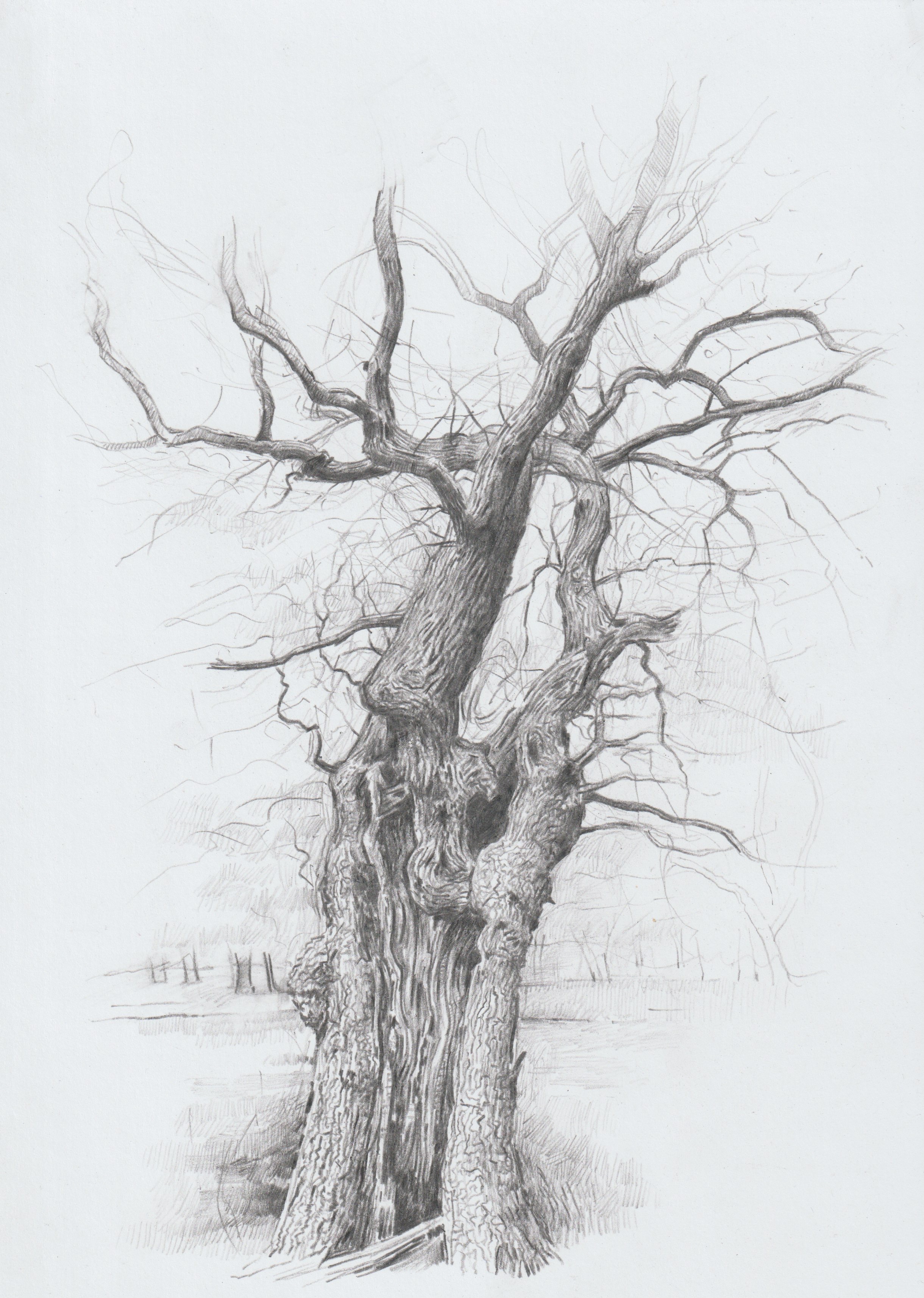
On reaching our accommodation that evening, I delved back into Arboreal, an anthology of Woodland writing published by Little Toller Books. In his essay ‘Forest of Eyes’, Paul Kingsnorth, conveys the possible reason behind the feeling of being in Staverton. Talking about mycelium networks, he says: “A collective fungal consciousness: it is quite a claim… It could be that a woodland is not simply a collection of trees, bushes and birds. It could be that a woodland is, after all, alive. In some sense, it is a being. And it is watching you.”
“The oak woods at Staverton are the forests of childhood, the forests of dreams. Here perhaps more than anywhere else I have ever been, the forest of the imagination materialises, becomes actual.” (Sarah Maitland, Gossip from the Forest)
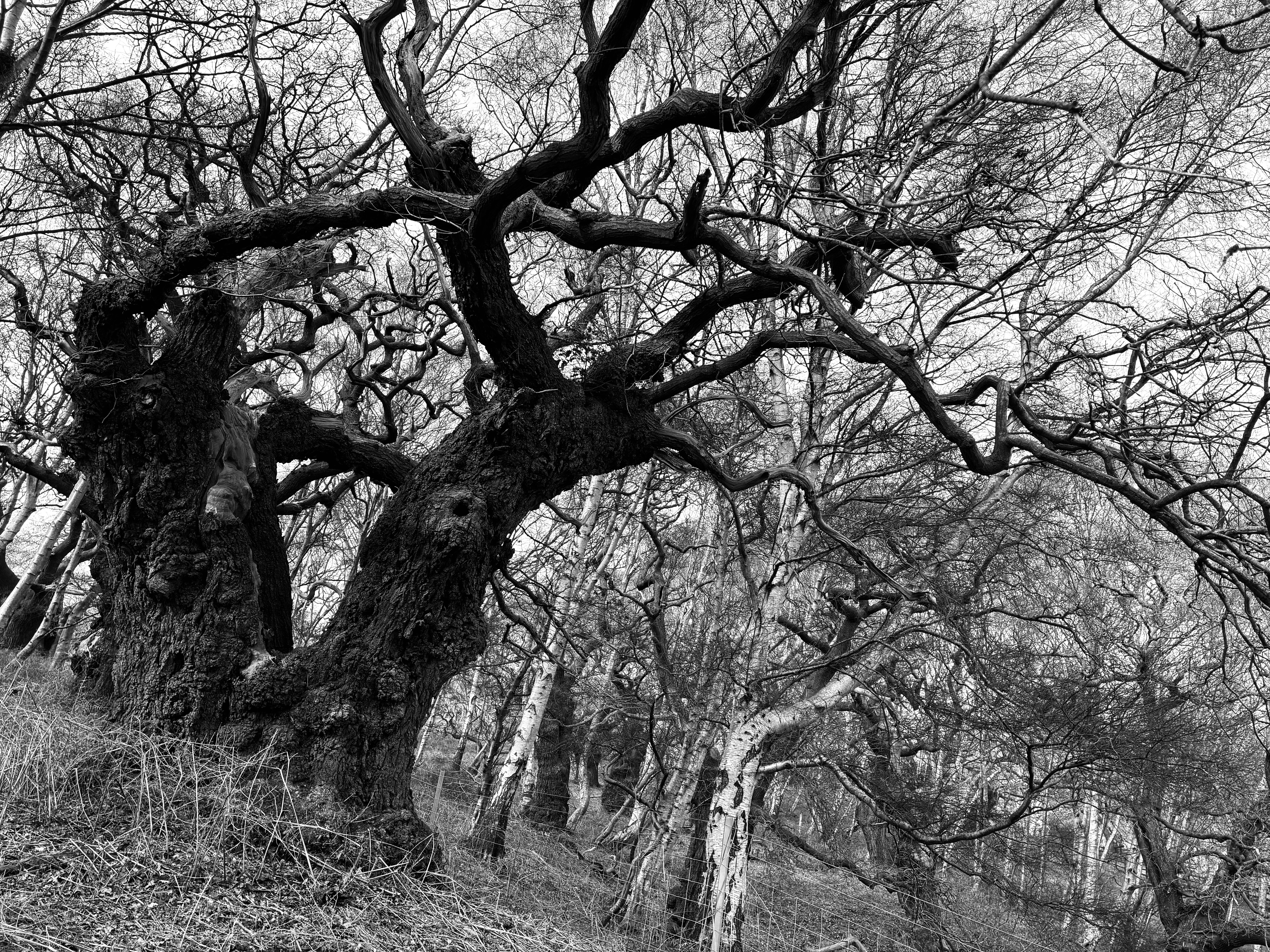
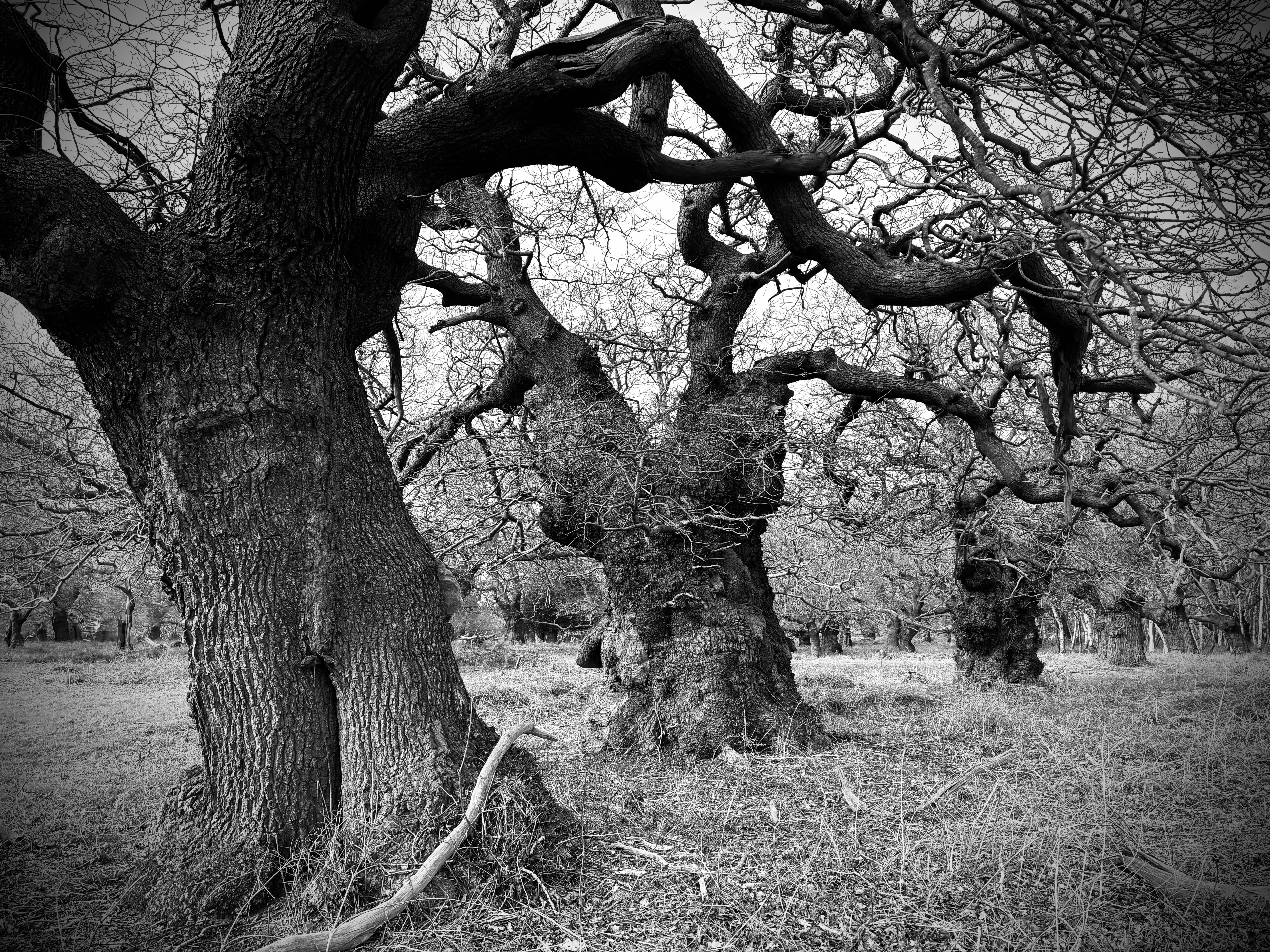
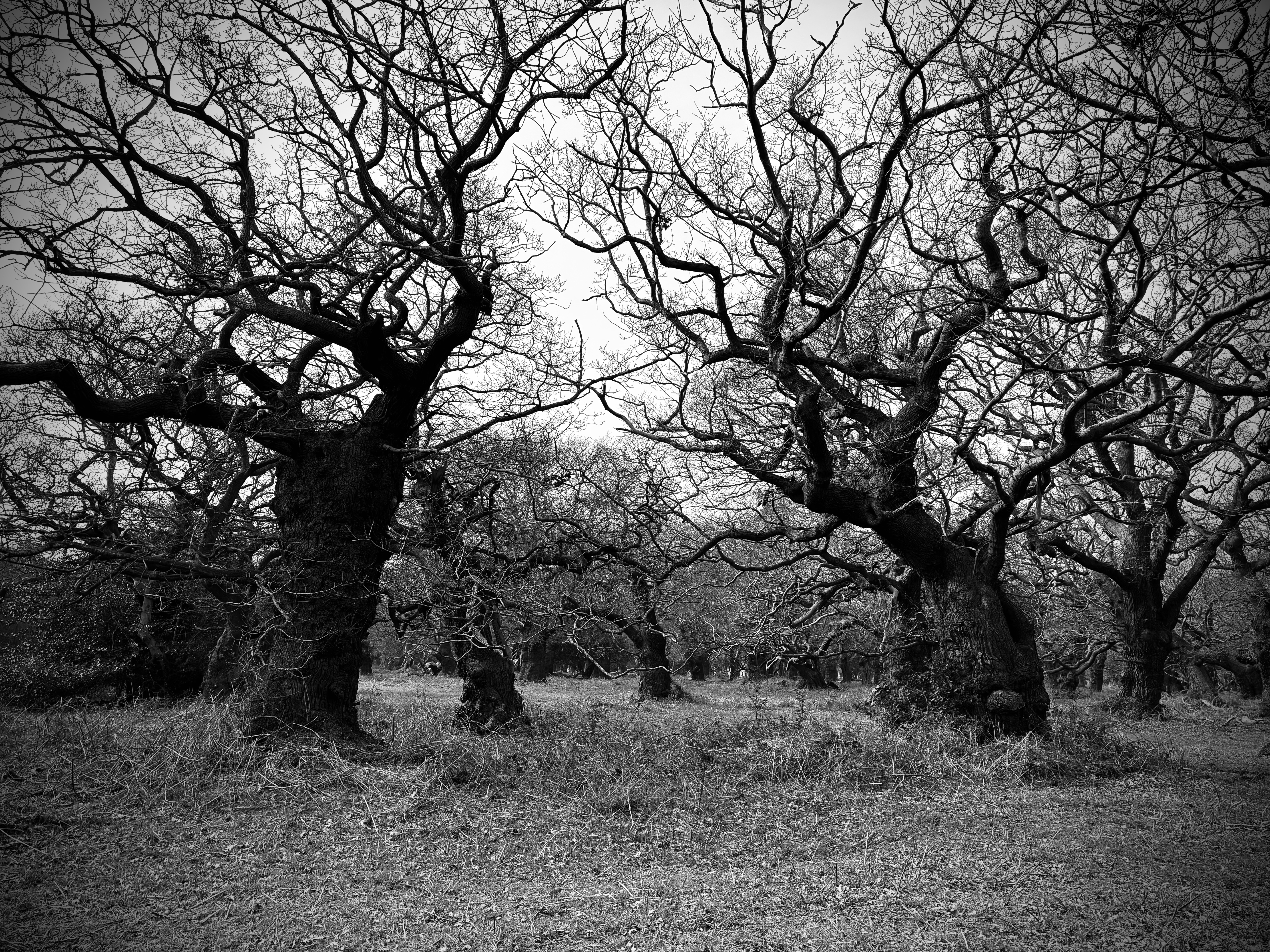
All drawings 21 x 30cm, Faber Castell Polychromos on Bristol Board
Also check out Chris Hamer’s blog, Frames of Reference, which explores Staverton Thicks and many other sites

